Harnessing Wild Australian Yeast Strains for Non-Alcoholic Beer Production
Jonathan Arundel1 and Fiona Kemm2
1Australian National University, 2Singer Instruments Ltd.
Could wild Australian yeasts be the next big frontier in non-alcoholic brewing?
Dr Jonathan Arundel and Professor Benjamin Schwessinger of the Australian National University are leading this project funded by an Australian government grant. They are collecting yeast strains that are well-matched for non-alcoholic beer brewing from the Australian wilderness and then improving on these yeasts in their lab through breeding. Their goal? A thirst-quenching non-alcoholic beer not just made from Australian malted barley and hops – but also Australian yeast.
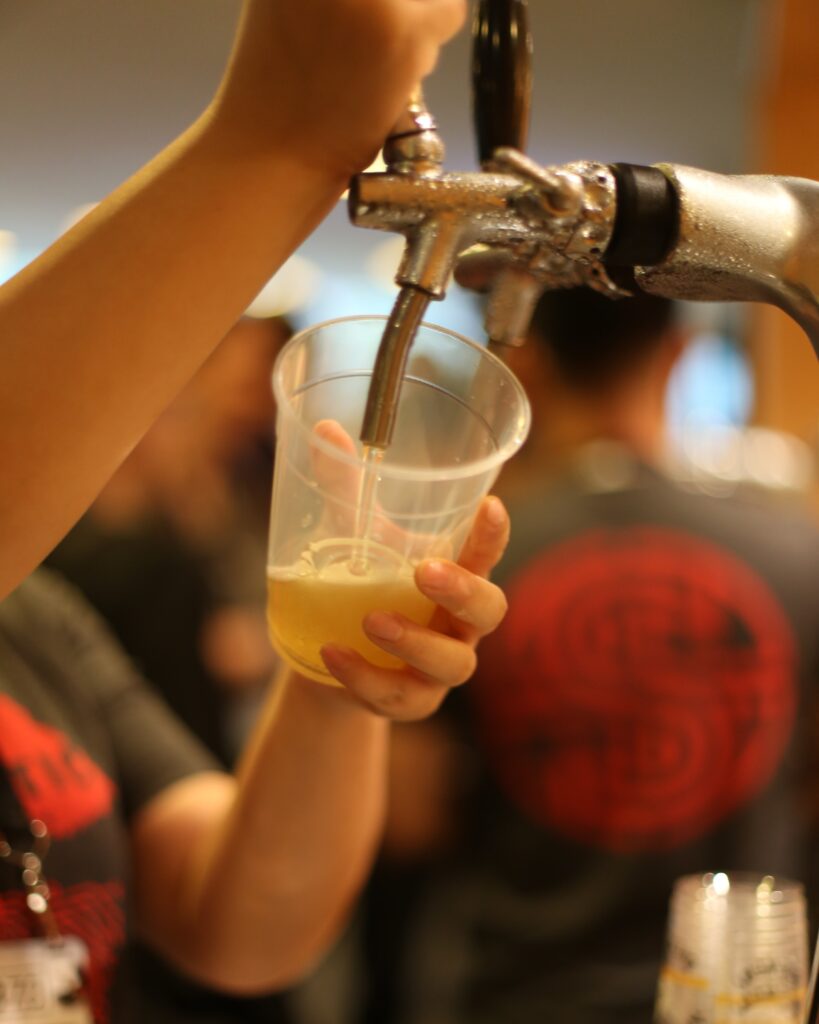
Why is developing better non-alcoholic beer yeasts important?
The global market has seen a rise in the consumption of non-alcoholic beverages and as such, the demand for non-alcoholic versions of traditionally boozy products is increasing. Most large breweries that manufacture non-alcoholic beers today strip off the alcohol after fermentation is done with energy-intensive membrane filtration or vacuum distillation. The problem is that stripping away the alcohol also strips away the flavour – which then needs to be separated and put back in.
A better approach is to go back to nature and find yeast that ferment less of the wort (unfermented beer) sugars to start with – and get a beer that is less than 0.5% ABV with just the traditional ingredients – water, malted barley, hops and yeast.
The end result is a better beer:
- That tastes more like a beer and less like a soft drink.
- That’s more energy efficient to make.
- That can be produced by smaller breweries without expensive specialised equipment.
Why is yeast important in beer production?
The yeast used in beer production plays a significant role in the qualities and flavour of the final product – whether it’s boozy or not (1). Brewers making a boozy beer have access to literally hundreds of strains of domesticated brewing yeasts, each bringing something different to the final beer. These yeasts all have something in common though – they come from the Northern Hemisphere where beer brewing first originated more than 5000 years ago, and where the bulk of yeast research is still concentrated today. Jonathan and Benjamin recognised an opportunity right in their own backyard; we already know Australia’s wildlife to be some of the most unique – surely the same could be true for its yeast population?!
Improving on nature through yeast matchmaking
Unsurprisingly, selection pressures in the wild are very different from selection pressures in historical breweries. As such, wild strains don’t always have the good manners of a domesticated strain.
“Brewers have had thousands of years to domesticate the traits they want – which is millions of generations – but we only have one year to achieve the same goal!”

Dr Jonathan Arundel
Australian National University
There are a few ways that scientists can approach this problem. In countries such as the United States, GMO yeasts are increasingly used in beer production (2). In many other countries, including Australia, regulatory approval requirements have slowed or constrained their adoption. There are techniques such as the aptly-named ALE (adaptive laboratory evolution) that can increase a strain’s fitness under certain conditions – a bit like a yeast bootcamp to get them in shape. Not every trait that is needed in a domesticated strain can be altered this way though. The approach of the ANU team is to combine the genetics of wild and domesticated strains through yeast matchmaking. Cue the mood lighting!
How to efficiently breed better non-alcoholic yeast strains
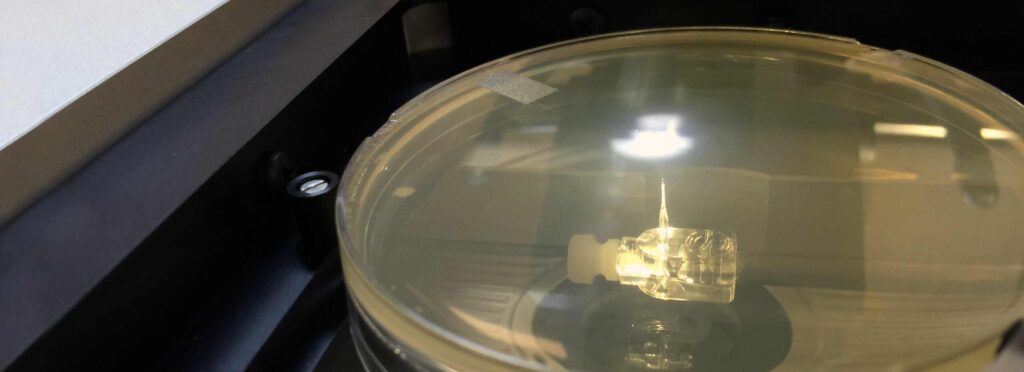
Jonathan and Benjamin are using SporePlay+ to speed up their yeast breeding program via tetrad dissection and allow them to efficiently and effectively track the interesting genes through breeding cycles. With this technique a breeding program takes weeks not months. They can select individual yeast spores from tetrads, allowing them to control and track exactly which phenotypes are passed on. Where ALE relies on random mutations occurring over time, tetrad dissection allows researchers to precisely combine and isolate specific phenotypes in a single generation.
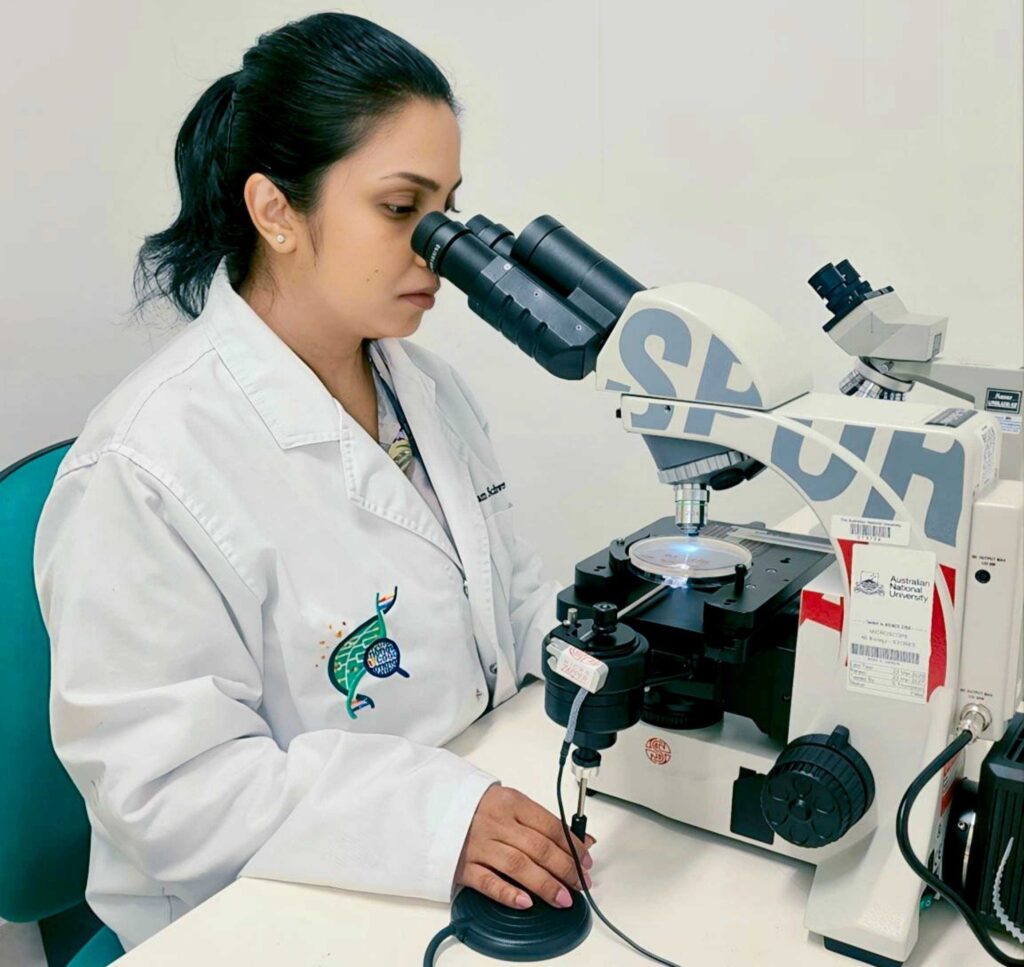
“For our breeding program, tetrad dissection gives us a real advantage because we can follow all four related spores from a single meiosis. When one offspring gives us a useful positive signal, we know the rest of that tetrad is worth a closer look, which makes screening more focused and efficient. It’s a hands-on approach, but when relatedness and trait tracking matter, it gives us insight that’s hard to get from screening random offspring alone.”
Dr Shenali Herath
Schwessinger Group, Australian National University
Applications of yeast beyond non-alcoholic beer
Beer is far from the only non-alcoholic beverage we enjoy that is fermented with yeast, and Jonathan sees the potential of Australian wild yeasts here as well. Australia has a long history of innovation in yeast for the wine sector through theAustralian Wine Research Institute, and they have an active research program focused on lower alcohol wines. But as Jonathan points out, coffee, cocoa and even kombucha all use yeasts, and we’re only just beginning to explore the potential of using specialised strains in their production. And the most efficient way to breed a better yeast? Use a tetrad dissection microscope to control the mating and select the best characteristics for your strains!
This project received grant funding from the Australian Government.
Ready to breed your own industrial yeast?
You have to learn what tetrad dissection actually is first!
References
- Aguiar-Cervera, J.E., Delneri, D., Severn, O. (2021) A high-throughput screening method for the discovery of Saccharomyces and non-Saccharomyces yeasts with potential in the brewing industry. Eng. Biol. 5(3), 72–80. https://doi.org/10.1049/enb2.12013
- Verstrepen, K. (2026) Inside the quest to build the ultimate non-alcoholic beer, National Geographic. Available at: https://www.nationalgeographic.com/science/article/non-alcoholic-beer-na-yeast-brew (Accessed: 14 May 2026).